

My journey with peptides didn't start in a lab or a lecture hall — it started on a scale showing 308 lbs and a determination to change everything. I tried the GLP-1 path, moved through Ozempic, and eventually found Retatrutide.
Twenty-five years in clinical nursing taught me to question what I couldn't explain. That curiosity, combined with my own transformation, became the foundation of Coleman & Co.
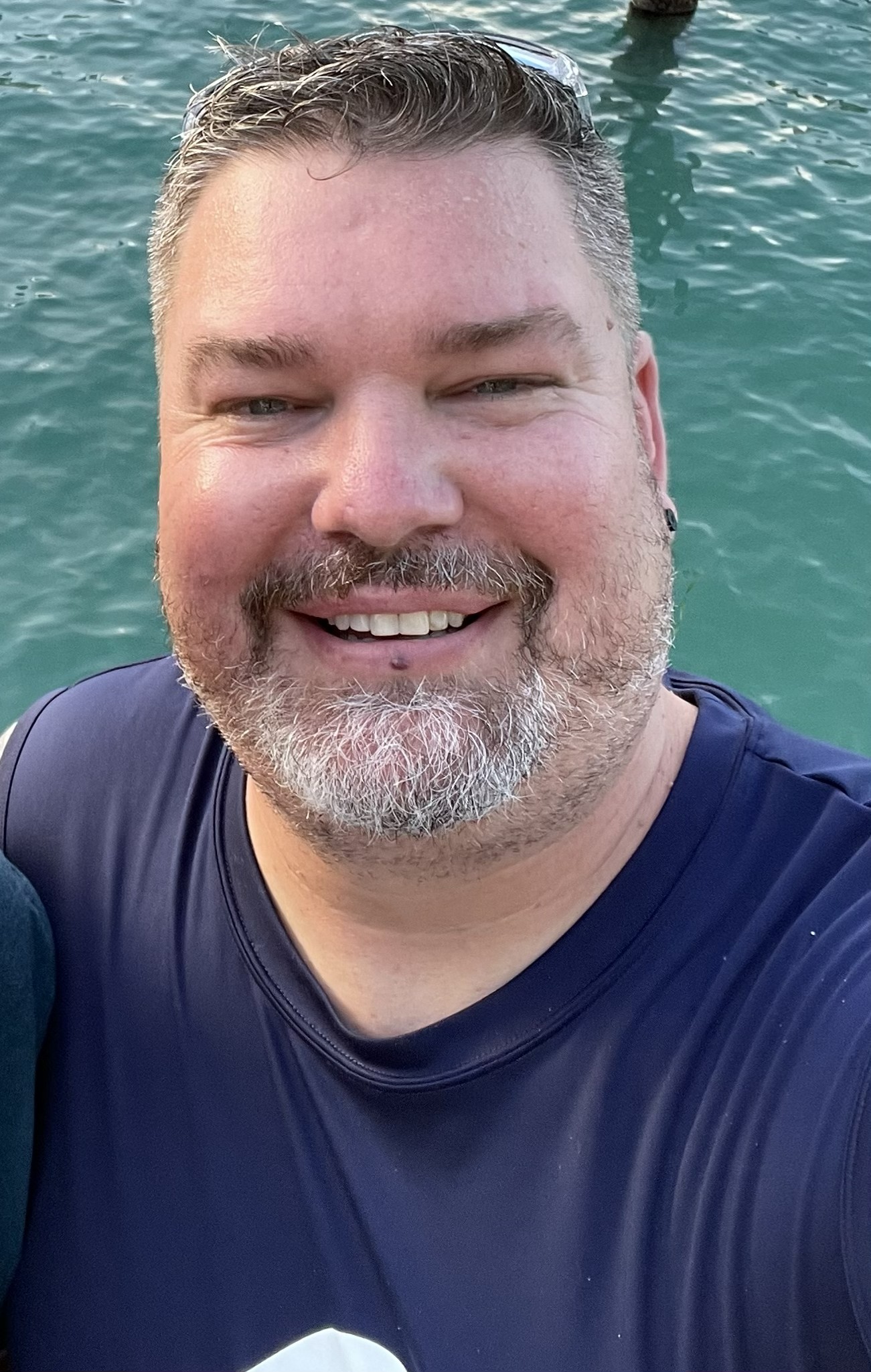
Before Coleman & Co. had a single client, it had Winston and Birdie. Present for every late-night planning session, every protocol review, every moment this practice went from a dream to reality.





Coleman & Co. is a family practice — and that includes the four-legged members. Submit your pet's photo and story to be featured.
It's not easy to write about the heaviest version of yourself. But 308 pounds is the number that started everything — and honesty about where you come from matters more than protecting your image.
I was a clinical nurse. I knew what metabolic dysfunction looked like. I'd watched patients struggle with it for 25 years. What I didn't fully appreciate was that knowing the biology doesn't protect you from living it.
Ozempic came into my life through my own clinical awareness. I understood the mechanism — GLP-1 receptor agonism, delayed gastric emptying, appetite suppression. I started carefully, monitored closely, and the weight began to move. Then I moved to Retatrutide — a triple agonist targeting GLP-1, GIP, and glucagon receptors — and that's where the real shift happened. Not just in the scale, but in my metabolic health markers across the board.
Watching my own recovery made me curious about everything else in the peptide space. BPC-157 for tissue healing. CJC-1295/Ipamorelin for GH optimization. The research was there — not always FDA-approved, but peer-reviewed and growing.
Coleman & Co. was founded in 2024 on a simple premise: people deserve access to these protocols, delivered by someone with 25 years of clinical experience who has lived the transformation himself. Not a celebrity brand. Not a vanity clinic. A real practice built by someone who needed it first.
— Brandon Coleman, RN · Founder, Coleman & Co.
Reconstitution is the process of adding bacteriostatic water (BAC water) to a lyophilized (freeze-dried) peptide powder to create an injectable solution. Improper technique can destroy the peptide, reduce efficacy, or introduce contamination.
Peptides are fragile chains of amino acids that degrade under heat, light, moisture, and mechanical stress. How you store your vials — before and after reconstitution — directly determines how effective they remain through your protocol.
Freeze-dried peptide powder is the most stable form. Stored correctly, most lyophilized peptides maintain potency for 12–24 months.
Your Coleman & Co. fridge sheet is designed to track this for you — it's not just a dosing calendar, it's your potency log. Use it.
Every relationship at Coleman & Co. starts with a real conversation — not a sales script. Here is how your first consultation typically flows, from intake to your personalized protocol.
Complete the intake form so we understand your goals, health history, medications, and lifestyle. That context lets us use our time together on strategy instead of paperwork.
You receive a written protocol summary, sourcing guidance through compliant pharmacies, and clear next steps. Nothing leaves the practice without Brandon’s review — this is not a volume clinic.
Consultations are informational and do not establish a patient relationship until you enroll as a member under our practice policies.
CJC-1295 (with DAC) and Ipamorelin work synergistically — CJC-1295 provides sustained GH pulse amplitude elevation, while Ipamorelin adds selective GH release without cortisol or prolactin side effects seen with older peptides.
This protocol works best as a complement to active physical therapy — not a replacement. BPC-157 appears to accelerate the tissue remodeling phase, which is where most stalled recoveries get stuck.
Body Protection Compound-157 (BPC-157) is a synthetic pentadecapeptide derived from a protein found in gastric juice. Despite widespread clinical use, BPC-157 remains primarily studied in animal models.
BPC-157 promotes angiogenesis, upregulates growth factor receptors, modulates nitric oxide systems, and accelerates collagen synthesis — mechanisms consistent with observed wound healing and tissue repair effects in preclinical studies.
As of 2024, large-scale randomized human trials for BPC-157 do not exist in the published literature. Anecdotal reports are abundant and largely positive, but cannot substitute for controlled human data. Coleman & Co. uses BPC-157 with full informed consent about this evidence gap.
Thymosin Beta-4 is a naturally occurring 43-amino acid peptide found in virtually all human and animal cells. It plays a central role in actin sequestration and cell migration — processes critical for wound healing, tissue repair, and inflammation modulation.
Animal studies demonstrate consistent benefits in cardiac tissue repair (post-MI), wound healing, CNS injury, and musculoskeletal recovery. The cardiac data is particularly robust — TB-500 has been studied extensively as a potential heart failure treatment in rodent models.
No large-scale randomized human trials of TB-500 exist as of 2024. Clinical use in athletic and recovery settings is driven primarily by extrapolation from animal data and patient-reported outcomes. Coleman & Co. uses TB-500 within protocols where the animal evidence is strongest, always with full informed consent about the evidence gap.
Name changed for privacy. Published with member consent.
"I had the surgery in January. By April, my orthopedic surgeon was running out of things to say. The rotator cuff repair was intact on imaging, but my functional recovery had plateaued. Physical therapy was doing maintenance work — not progress."
"I found Coleman & Co., had a full intake call with Brandon, and started a 16-week protocol with subcutaneous BPC-157 alongside my continued PT schedule."
"By week eight, my PT was asking what I was doing differently. By week twelve, I was back to overhead pressing — something I hadn't done since before the surgery. Something changed when I added it, and nothing else had changed."
Individual member experience. Results vary based on injury type, protocol adherence, and individual biology.
Name changed for privacy. Published with member consent.
"I'm a nurse. I've done night shifts for the better part of a decade. My sleep was broken in a way that felt permanent — 4 to 5 hours, never deep, always waking around 3am like clockwork. I'd tried melatonin, magnesium, sleep hygiene everything."
"I came to Coleman & Co. because a colleague kept talking about how differently she was recovering from shifts. Brandon walked me through the GH peptide options and I started on a CJC-1295/Ipamorelin stack, dosed at night."
"Week three I slept seven hours and didn't fully wake once. I remember looking at my phone in the morning genuinely not understanding what had happened. By week six it was consistent — deeper, longer, and I was recovering from 12-hour shifts the way I used to in my twenties."
Individual member experience. Results vary based on protocol adherence and individual biology.
In 2023–2024, the FDA issued actions targeting compounded peptides — placing several widely used compounds on the "demonstrably difficult to compound" list, restricting production by 503A and 503B compounding pharmacies.
The most significant impact has been on BPC-157, CJC-1295, Ipamorelin, TB-500, and PT-141. Bremelanotide has since received FDA approval as Vyleesi.
We source exclusively through licensed, inspected, and compliant compounding pharmacies. We do not use gray-market suppliers. If a compound becomes legally unavailable, we will tell you directly and work with you on legal alternatives. Transparency is non-negotiable here.
When the FDA approved tirzepatide (Mounjaro/Zepbound) and semaglutide (Ozempic/Wegovy), unprecedented demand outpaced manufacturer supply — triggering FDA shortage designations that temporarily allowed compounding pharmacies to produce these drugs legally under 503A and 503B frameworks.
The FDA has moved to end shortage designations as manufacturer supply has improved. 503B facilities received an extended compliance period, but 503A pharmacies face tighter restrictions. Enforcement actions have begun against non-compliant facilities.
We source through 503B facilities with active FDA registration. Members currently on GLP-1 protocols will be directly notified of any changes that affect their access. If you have questions about your specific protocol and its regulatory status, reach out — you'll get a straight answer.
Educational only — not individualized medical advice. Your protocol is set with Brandon based on intake, labs, and goals.
I get asked constantly what I personally take. Here is the honest framework: I prioritize metabolic stability first, tissue recovery second, and sleep and stress resilience third — because without those three pillars, everything else in a stack is noise.
On the metabolic side, I stay consistent with the GLP-class path that worked for my own transformation — the same class of tools we discuss openly in the founder story. I titrate slowly, track how I feel more than the scale, and I do not chase the highest dose; I chase the lowest effective dose where energy, appetite, and labs stay aligned.
For recovery, I still lean on the peptides where the preclinical story is strongest and where my own clinical experience matches what members report — especially around soft tissue wear and tear from years on the floor as a nurse. I pair those choices with real PT, real sleep hygiene, and real protein targets. Peptides are not a substitute for fundamentals.
For sleep and stress, I favor night-dosed combinations that support natural GH rhythm rather than stimulant-style shortcuts. If I am not sleeping, I fix sleep before I add complexity anywhere else.
Members deserve to know that I do not recommend anything I would not hold to the same standard for myself: evidence-informed, legally sourced, monitored, and adjusted over time. If you want your own written protocol, start with intake and a consult — the dashboard “Active Protocol” panel is where your individualized plan belongs, not a blog modal.
— Brandon Coleman, RN · Founder
General education for members. Dosing and titration are individualized — follow your written plan and message the practice if something feels off.
Weeks one and two are the onboarding phase: appetite changes, some GI adjustment, and a lot of “is this working?” energy. By weeks three through six, most people on a triple agonist path stop guessing and start noticing patterns — and that is exactly when small mistakes compound if you are not paying attention.
We care about how you sleep, how you recover between workouts, hydration, and whether side effects are trending better or worse. If something is trending worse, we want the message before you white-knuckle through another two weeks.
Coleman & Co. does not shop anonymous internet lists. Every relationship starts the same way: licensed compounding infrastructure, documented compliance, and a direct line to a pharmacist or medical director who will answer technical questions.
If a pharmacy loses a license line item, if a peptide lands on a difficult-to-compound list, or if supply tightens, you hear it from us with options — not silence. That is the same transparency standard described in our FDA / compounding news pieces on this blog.
Policies evolve with regulation; this overview describes principles, not a guarantee of availability for any specific SKU.
Every practice has a culture. Ours was set by two animals who never read a single protocol and yet have the most calming effect on every Zoom call they've appeared in uninvited.
Winston arrived first — a rescue with opinions about everything and an inexplicable fondness for sitting directly on top of whatever paperwork is most important. He has reviewed every version of the Coleman & Co. website by walking across the keyboard at least once per session.
Birdie is the chaos agent. Smaller, faster, and deeply committed to being in whatever room you aren't in. She once knocked over a full cup of coffee onto a printed compound pricing spreadsheet, which is why we now use Supabase.
They don't know what peptides are. They don't care. They show up every day — and that is the spirit of this practice.
Share your furry family member with the Coleman & Co. community.